
How We Got Here
The story of the Croton Free Library is one of community-led growth. The collection formed a century ago when a small group started a local community book club and began informally circulating books. By 1937, three local civic groups proposed establishing a proper library. They organized a house-to-house book drive on a Sunday afternoon, netting over 1,000 volumes.
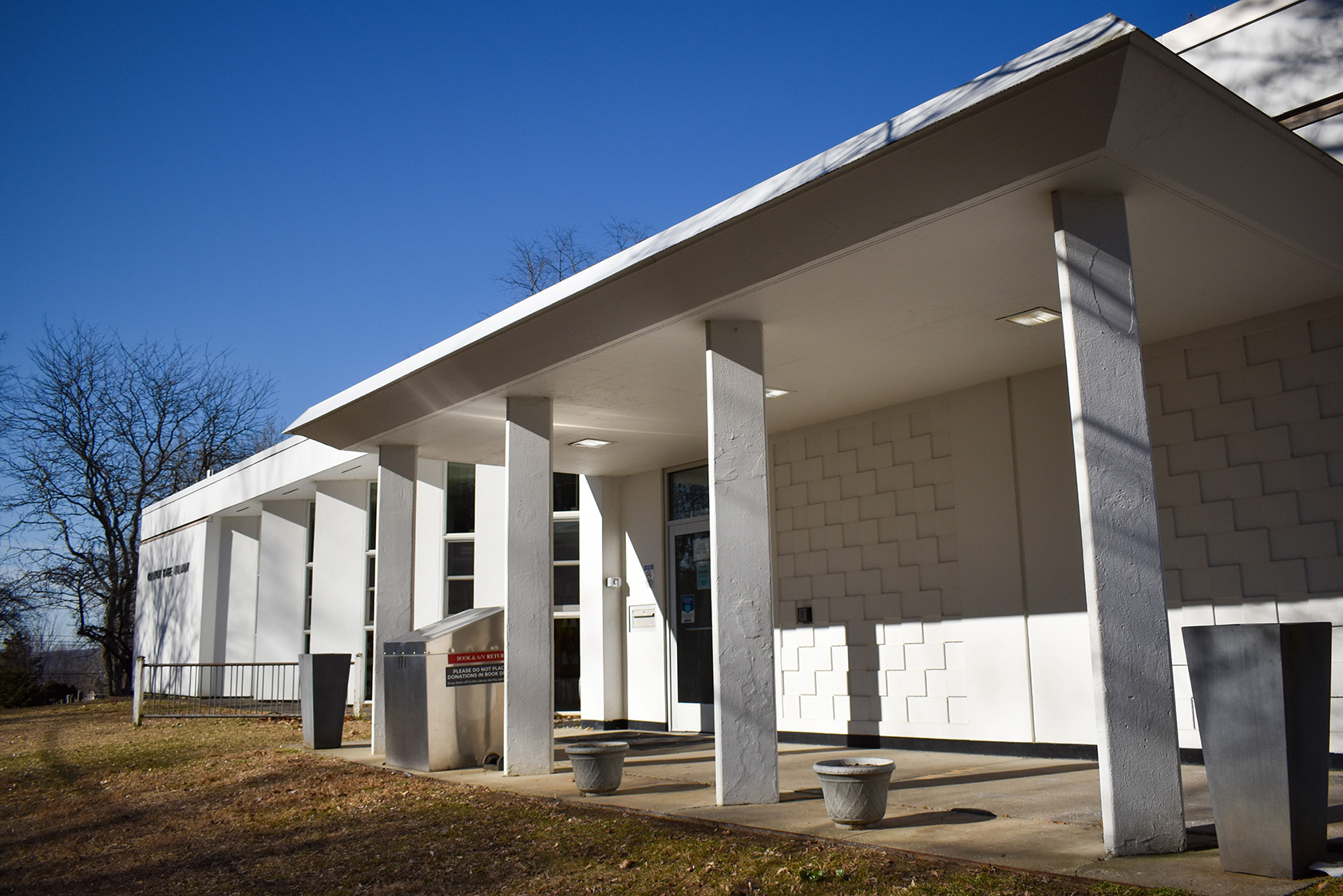
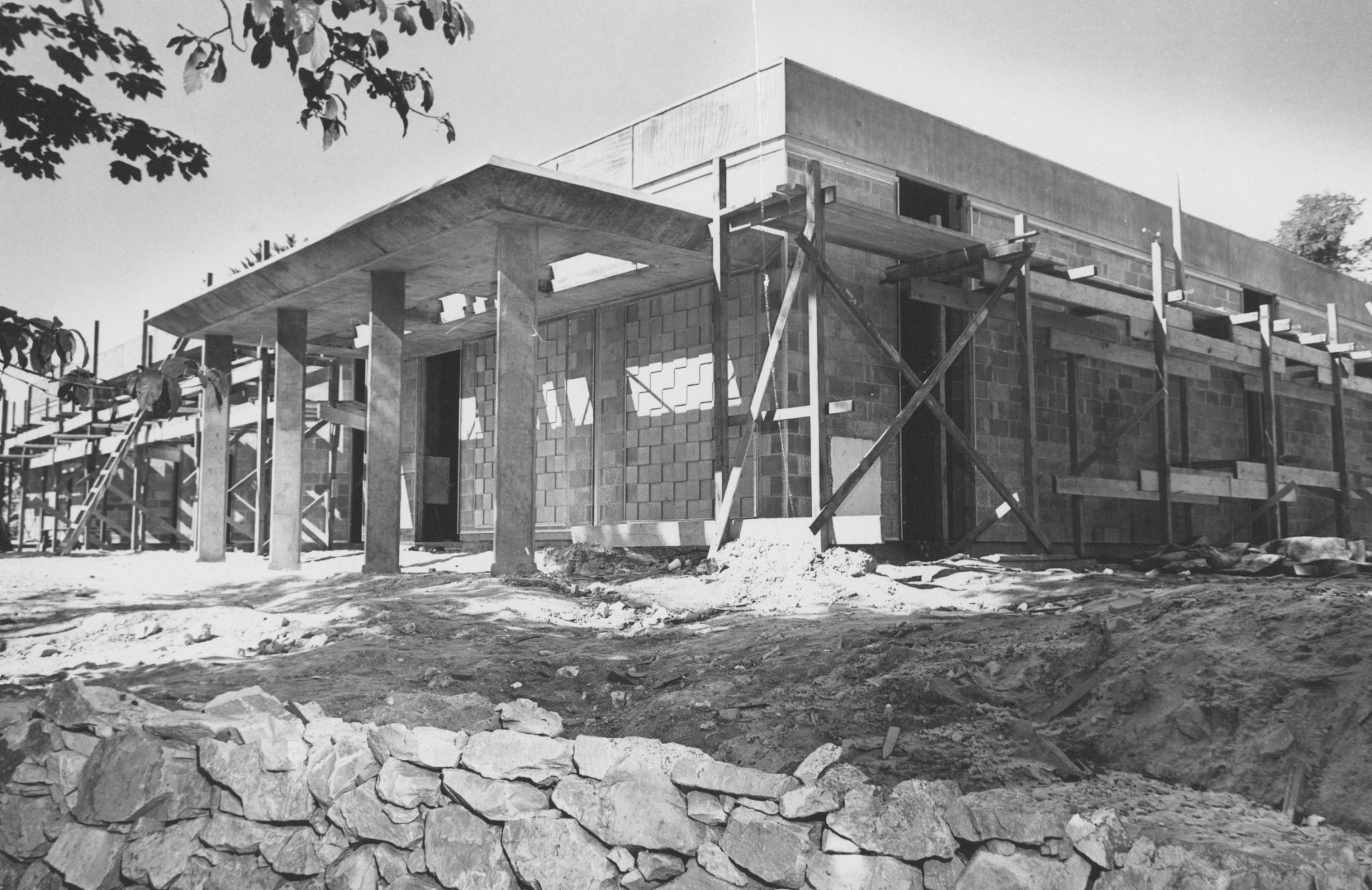
Initially, the Library operated out of a room at the high school and later moved to the Municipal Building, but it quickly outgrew that space. The community rallied to fund construction of our purpose-built library on Cleveland Drive, which opened in 1965. Over the decades, the Library evolved alongside the village, expanding its space through additions to accommodate our growing community. The largest of these occurred in the 1990s with the construction of a major addition that solved our need for a large public meeting space while expanding the Children's Room at the same time.
The Case for Renovation
While our Library remains a warm and welcoming place, decades of heavy use and natural aging have brought the physical building to a critical crossroads. Our staff has successfully reshaped our services for the 21st century, but the infrastructure behind the scenes is failing.
Rather than pursuing an expensive, brand-new architectural statement, we chose a methodical, surgical renovation plan: fix what is broken, update our layout, and do it at the lowest possible cost. A comprehensive 2017 Technical Inspection Report made the urgency clear, finding that several of our major systems had entered their final phase of useful life. The data is unambiguous:
- The Roof, Windows and Doors: The report rated the roofing as being in fair to poor condition. The exterior windows and doors were also found to have reached the end of their useful lives, requiring replacement to ensure energy efficiency and safety.
- Navigational Challenges: The Library was designed for 1960s needs and has expanded over time. The side entrance, originally intended for after-hours access to the Ottinger Room, has become the main entrance. Visitors must wind their way through the Children’s Room to find the main service areas of the Library, creating both safety concerns and traffic-flow problems.
- Space & Layout Constraints: Community needs have changed. We require an expanded Children's Room, private spaces for quiet study, additional meeting rooms for local clubs, and better-placed restroom facilities.
A Community of Frequent Users
The urgency of this project is driven by how much you use this space! Despite an aging facility, the Croton community utilizes the Library at a rate that far outpaces many of our neighbors. On any given day, our building fills with toddlers at story hour, students and adults studying, tutors at work, and standing-room-only weekend concerts. Our patrons aren't just members—they are active learners, readers, and creators.
CHECKOUTS PER REGISTERED PATRON
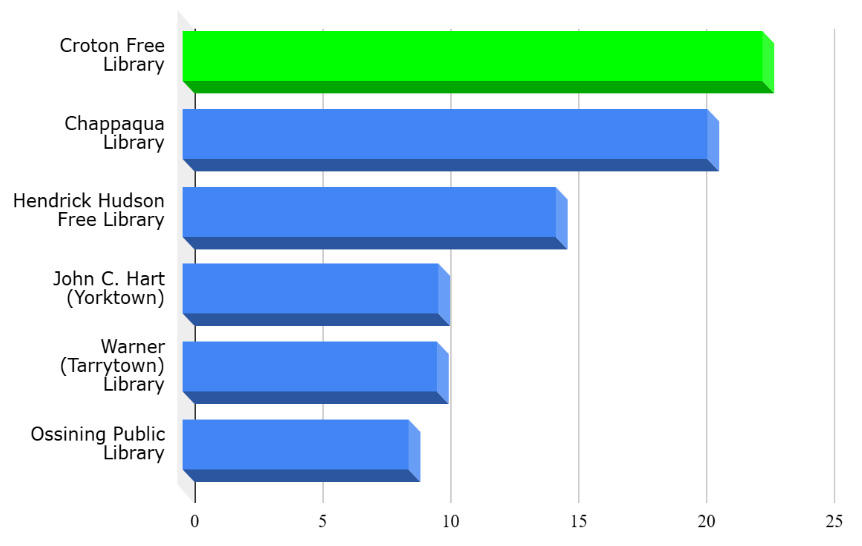
BASED ON 2025 STATISTICS
This renovation addresses our pressing structural needs without expanding the building's footprint or changing its familiar appearance. By modernizing the interior layout and adding energy-efficient green upgrades (hopefully including solar panels)—we are ensuring that this community asset remains a vibrant, safe, and welcoming hub for the next generation.
The Library and Butler Rowland Mays present the first conceptual designs to the public.
The Library contracted a firm to help secure a $5 million loan.
The board rejected a scaled-back design and decided to pursue a loan to achieve the desired design.
The board established monthly public work sessions dedicated strictly to the renovation.
A leadership committee formed to spearhead future public fundraising efforts.
Changing Our World presented a report showing fundraising potential fell short of the budget.
Funds were allocated for a contract with fundraising consultant Changing Our World.
The board approved the master plan layout and requested capital campaign proposals.
The ad hoc Renovation Advisory Committee held its first official meeting.
The community was invited to share priorities through a building survey.
Butler Rowland Mays presented preliminary budget estimates and discussed project phasing options.
Butler Rowland Mays presented the preliminary conceptual design and reconfiguration plan.
The board approved a contract with Butler Rowland Mays for planning and design.
Trustees visited regional libraries and interviewed past clients of the top competing firms.
Butler Rowland Mays presented initial suggestions to better serve the community.
Butler Rowland Mays conducted a full-day site visit at the Library.
Trustees contracted Butler Rowland Mays for a site visit and detailed redesign recommendations.
The Library interviewed multiple architectural firms and surveyed regional libraries for recommendations.
Discussions focused on improving physical spaces to better accommodate community needs.
The Library began exploring a full renovation of the building with a design consultant.